Why healthcare headshots are held to a different standard
A healthcare headshot is usually the first thing a patient sees before they meet you. It sits on the hospital "find a provider" page, the clinic website, the telehealth booking screen, and the referral email a GP forwards. In that moment the photo is doing one job: signalling that this is a calm, competent person you can trust with your health. Corporate headshot conventions such as dramatic lighting, a dark moody background, or a power-pose crop tend to work against that.
The second difference is scale. A single physician might appear in five or six places at once: the health network directory, a private practice site, a specialist referral platform, the state medical board listing, LinkedIn, and a conference program. Each of these crops and compresses the photo differently. A headshot that looks great at full size but loses the face at 80 pixels wide is a liability on a directory page where patients are scanning a list of thirty providers.
Finally, healthcare teams change constantly. New residents rotate in, agency nurses join for a season, a locum covers leave. Traditional studio shoots cannot keep up, so most clinic team pages end up as a mix of studio photos, phone snapshots, and empty placeholder silhouettes. Being able to produce a consistent-looking headshot for a new hire in the same afternoon they start is the practical reason most practices look at AI generation in the first place.
Scrubs, white coat, or business attire?
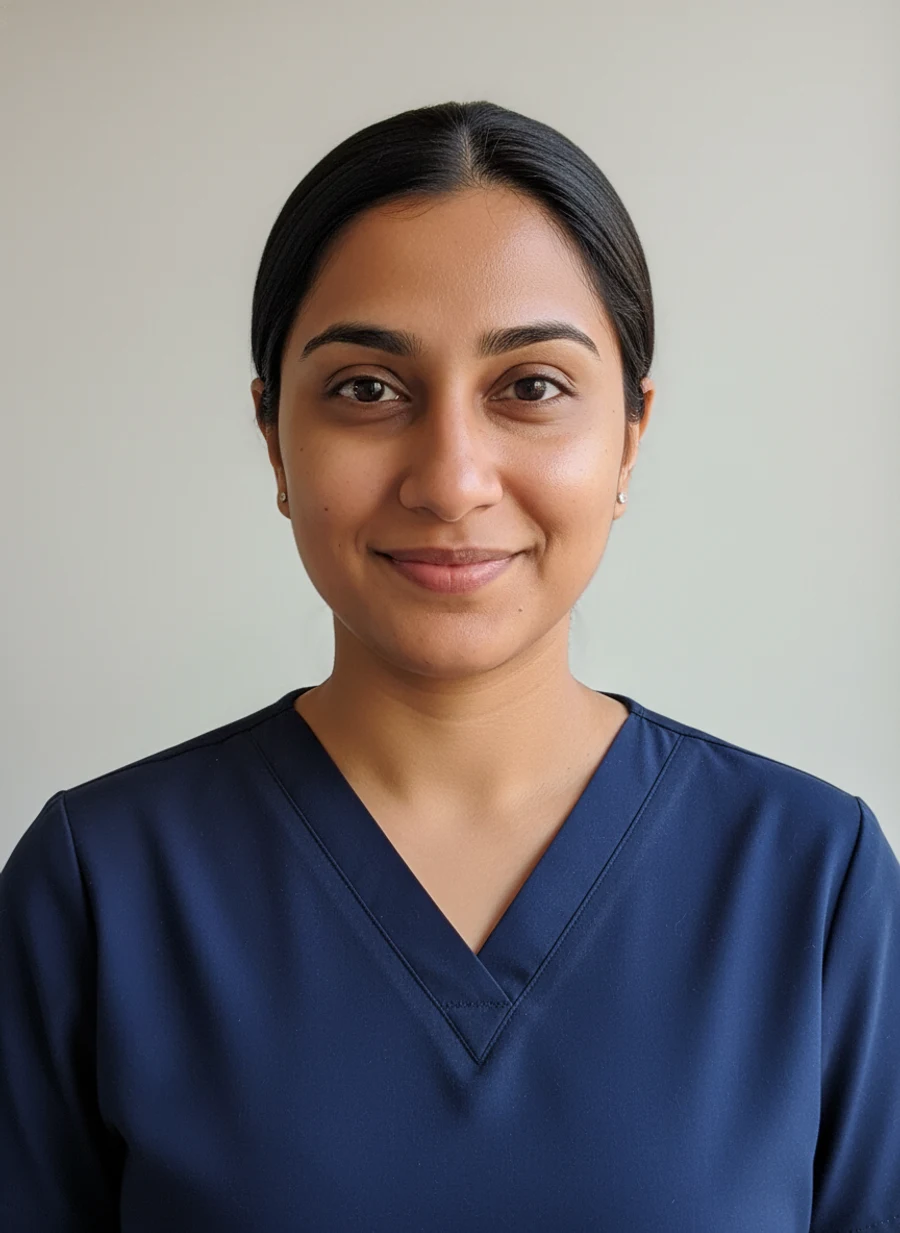
The right wardrobe depends on where the photo will live and what patients expect from your role. Nurses, midwives, physiotherapists, radiographers, and most allied health professionals are best served by clean scrubs in navy, teal, or charcoal. Scrubs read instantly as clinical and approachable, and they photograph well because the flat colour keeps attention on the face.
Physicians and specialists have two defensible options. A white coat over a collared shirt or blouse remains the strongest trust signal for patient-facing directory photos, particularly in hospital settings. A plain business look, such as a dark blazer with an open collar, works better for LinkedIn, research profiles, and speaking engagements where the audience is peers rather than patients. Many doctors keep both versions and use them in different places.
Practice managers, receptionists, billing staff, and other non-clinical team members should avoid scrubs unless they genuinely wear them at work. Business casual in muted tones keeps the team page coherent without implying a clinical role. Whatever the wardrobe, the same background and lighting across every team member matters more than any individual outfit choice.
How to take a source selfie in a clinical setting
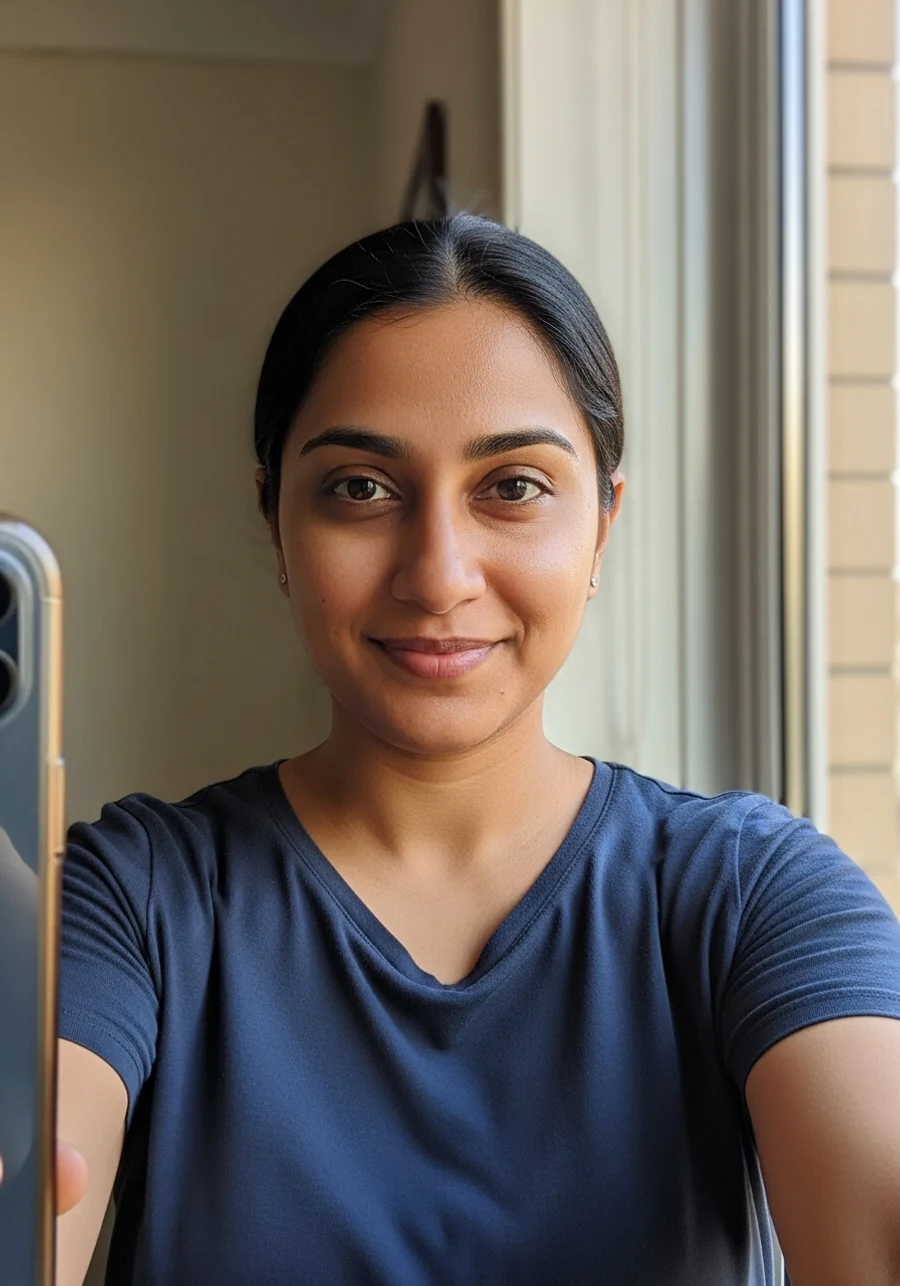
The generator needs one clear, front-facing photo of you. Stand near a window or under even overhead light, not directly under a downlight that puts shadows in your eye sockets. A plain wall, a closed door, or a curtain works as a background; the final background is replaced anyway, so it only needs to be uncluttered. Take off your mask and any face shield, keep your hair off your face, and remove a lanyard or stethoscope if it crosses your neckline. Glasses are fine as long as there is no glare on the lenses.
Look straight at the camera with a relaxed expression. You do not need to be in scrubs or a coat for the source photo, and you should not try to pose for the final look. The wardrobe, background, and lighting are chosen in the studio step after upload.
Producing a consistent set for a whole practice or department
For a team page, decide on three things once: a wardrobe rule per role, a single background tone, and a single crop ratio. Write them down and reuse the same choices for every person, including new starters months later. Consistency is what makes a team page look intentional rather than assembled. It also helps patients scan the page, because their eye is not being pulled between a moody studio portrait and a bright phone snapshot.
Most practices find it easiest to have one person, usually the practice manager, collect selfies from staff and run them through the studio with the agreed settings. Each staff member then only needs to approve their favourite result. A department of twenty can be photographed this way in an afternoon without pulling anyone off the floor.
Where AI headshots should not be used
These are profile photos, not identity documents. Do not submit a generated headshot where a live-captured photo is required: passports, driver licences, government-issued ID, hospital access badges that are captured on site, or any registration and credentialing process whose rules specify an unaltered photograph. Some medical boards and hospital credentialing offices also have their own policies on edited images, so check before uploading a generated photo to an official register. For everything patient-facing and professional-facing, from directories to LinkedIn to conference bios, a well-made AI headshot is entirely appropriate and is already common practice.